VIP Smiles Family Dentistry Syracuse, UT

VIP Smiles Dental

385-316-6386
  • Dental Services
    • Cosmetic Dentistry
      • Teeth Whitening
      • GLO Teeth Whitening
      • Dental Crowns
      • Dental Veneers
      • Cosmetic Dental Bonding
    • Restorative Dentistry
      • Dental Fillings
      • Dental Implants
      • Root Canals
      • Gum Disease
      • Tooth Extractions
      • Wisdom Teeth Removal
    • Family Dentistry
      • Dental Cleanings And Examinations
      • Dental Sealants
      • Second Opinion Dental Consultation
    • Orthodontics
      • SureSmile
      • Traditional Braces
    • Emergency Dental Care
    • VIP’s Newest Dental Technology
      • Air Abrasion
      • CariVu Infrared Cavity Detection
      • CEREC Same-Day Dental Crowns
      • DIAGNOdent Laser Cavity Detection
      • Digital Dental X-Rays
      • GLO Teeth Whitening
      • Laser Dentistry
      • Sleep Apnea Treatments
  • Patient Portal
    • Financing
  • VIP Savings Plan
  • Smile Gallery
  • Our Practice
    • Meet Our Dentists
    • Meet Our Team
    • Office Tour
    • Blog
  • Reviews
  • Contact
  • Giveaway
    • Sponsorship

5 Benefits of Water Flossers

Home | Blog Post | Page 3

5 Benefits of Water Flossers

When it comes to maintaining your oral health, a good dental hygiene routine is essential. Brushing and flossing regularly are key to preserving a healthy and radiant smile. However, flossing can be hard, especially when you have braces or other orthodontic devices in the way. Luckily, there are solutions such as water flossers that can help you easily clean even the hardest-to-reach places around your teeth and braces.

#1. Effective Alternative to Traditional Flossing

As important as brushing your teeth is, it’s not enough on its own to protect you from cavities, tooth decay, and gum disease. Regular toothbrushes cannot always reach all the tiny little nooks and crannies in your mouth, so in order to protect yourself from various oral health issues, you also need to floss between your teeth.

Many problems with teeth and gums are caused by bacteria in the mouth. Bacteria feeds on trapped food particles and forms plaque, which erodes the teeth’s enamel and leads to cavities. Plaque can also harden into tartar, cause irritation of the gums, and even lead to tooth decay.
5 Benefits of Water Flossers

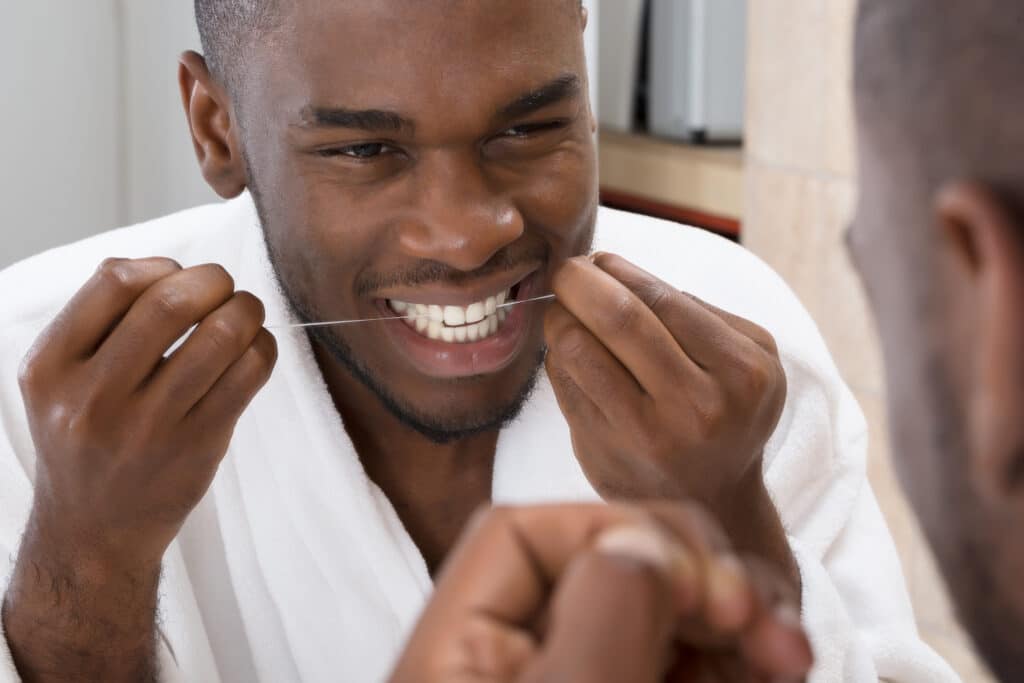
In order to remove trapped food, plaque, and bacteria from the little spaces between your teeth, you need to floss. Despite how important this habit is, many people skip this important step in their oral hygiene routine because maneuvering floss in these tight spaces can be difficult and tedious.

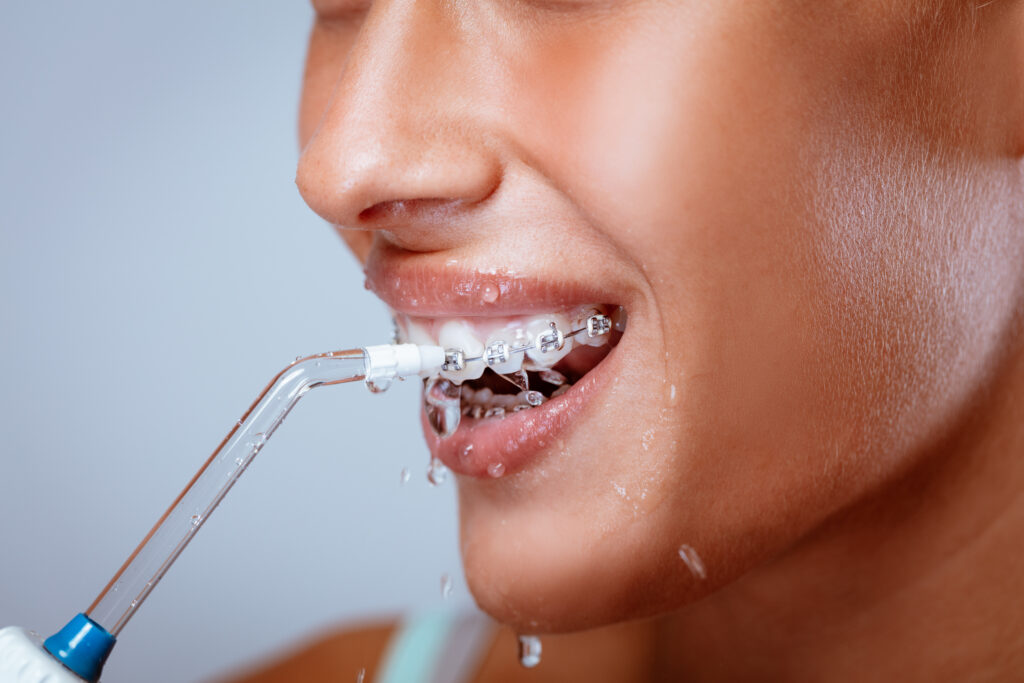
Instead of traditional flossing, many people find water flossing to be easier and more convenient. Unlike regular dental floss, water flossers utilize a pulsating stream of water to get in between your teeth and effectively remove bacteria and plaque, ensuring your mouth is thoroughly cleaned.

#2. Gentle on Gums, Tough on Plaque

Another reason many people avoid flossing is because their gums are sensitive. If you don’t floss regularly, you may have gum disease, which can make your gums swell and bleed easily. Flossing can exacerbate gum pain and cause bleeding, so if you have gum issues, you may be tempted to skip flossing. However, even though it may hurt, it’s more important than ever to keep your mouth free of plaque to give your gums a chance to heal.

Instead of regular dental floss, you may want to try a water flosser. The controlled water pressure soothes gums while removing plaque, making it perfect for people with gum sensitivity.

5 Benefits of Water Flossers

#3. Ideal for Orthodontic Patients

If you’re undergoing orthodontic treatment and have braces, permanent retainers, or aligners, it can be extra difficult to keep your teeth clean. Especially with braces, flossing with regular dental floss is nearly impossible. 

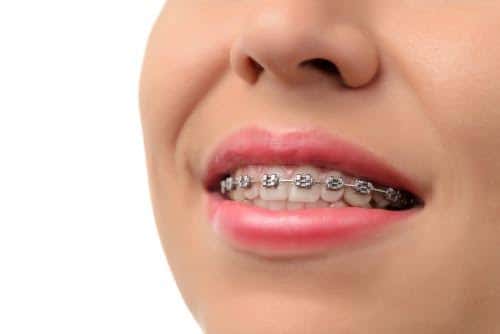
However, when you’re going through orthodontic treatment, it’s more important than ever to prevent bacteria and plaque from building up in all the little spaces of your mouth. Because braces create so many nooks and crannies for bacteria to hide, water flossers are an excellent way to keep your teeth clean and healthy. They can easily maneuver around your brackets and wires to clean both above and below the gum line and reduce your risk of cavities and tooth decay.

#4. No More Bad Breath

Chronic bad breath, also known as halitosis, is often caused by the accumulation of food particles and bacteria in the mouth. Bad breath can be embarrassing and frustrating, but with a good oral health routine, you can eliminate halitosis-causing bacteria and get your breath back to smelling nice and fresh.

In addition to brushing your teeth twice a day and using antibacterial mouthwash, consider also using a water flosser. These devices can be highly effective at combating bad breath by flushing out trapped food particles, bacteria, and plaque that have built up over time.

#5. Water Flossers Save Time

In your fast-paced, busy life, you may not always have time to spend several minutes flossing your teeth the old-fashioned way. Luckily, water flossers are quick and easy to use and can get the job done in a fraction of the time. Additionally, the varying pressure settings make it suitable for anyone to use, from children to seniors. 

High-Quality Care From VIP Smiles

At VIP Smiles, we offer braces and aligners to correct crooked or misaligned teeth and get our patients’ smiles looking great. Our professional team members are highly trained and specialize in providing high-quality care to all our patients. If you’re looking for excellent orthodontic services in the Syracuse, Utah, area, look no further than VIP Smiles! Contact us to schedule an appointment today.

Filed Under: Dentist Syracuse Utah, Orthodontist

restorative and cosmetic dentistry

If you don’t have the straight, white teeth Americans covet, you may feel self-conscious about your smile. This is especially true if you have any damage or decay, your teeth aren’t pearly white, or you have crooked or missing teeth. Fortunately, there are both restorative and cosmetic dentistry options to help you get your smile (and confidence) back. 

Even if you feel like your smile is beyond repair, modern dentistry has come a long way. There are many different restorative and cosmetic dentistry options to choose from in order to regain your confidence in your teeth.

Here’s what you need to know about restorative and cosmetic dentistry and the various treatment options available to you. In order to determine the ideal treatment methods for you, you will need to consult with a dentist. Based on your unique needs, your dentist will be able to provide you with personalized advice about the ideal treatment options to help you get your smile back.

What’s The Difference Between Restorative And Cosmetic Dentistry?

Both restorative and cosmetic dentistry can help you get your smile back. Restorative dentistry focuses on restoring the functionality of your teeth while cosmetic dentistry focuses on enhancing their aesthetic appearance.

Dental fillings, crowns, bridges, veneers, and implants are all types of restorative dentistry, as they are restoring your teeth to a healthy, functional state. Teeth whitening, crowns, veneers, and cosmetic dental bonding are all types of cosmetic dentistry, as they improve the look of your teeth. 

Depending on your specific concerns, what you need to feel confident in your smile again may vary. If you have missing teeth, chipped teeth, or large gaps in between your teeth, restorative dentistry options improve both the look and the function of your teeth. If your teeth function just fine but you’re self-conscious about how they look, you may opt for a cosmetic treatment, like teeth whitening or veneers.

white teeth desirable

Treatment Options To Help You Get Your Smile Back

Bear in mind that these are just a few of the treatment options available that can help you get your smile back. Just because something is listed here does not mean that it is right for you. In order to determine the ideal treatment method in order to help you get your smile back, you’ll need to consult with your dentist. 

Once they see your teeth and hear your concerns, they’ll be able to recommend treatment options that would work best for you. If you have any doubts about what is recommended to you, you can seek a second opinion. From there, you can plan appropriately on how to get your smile back.

#1. Teeth Whitening

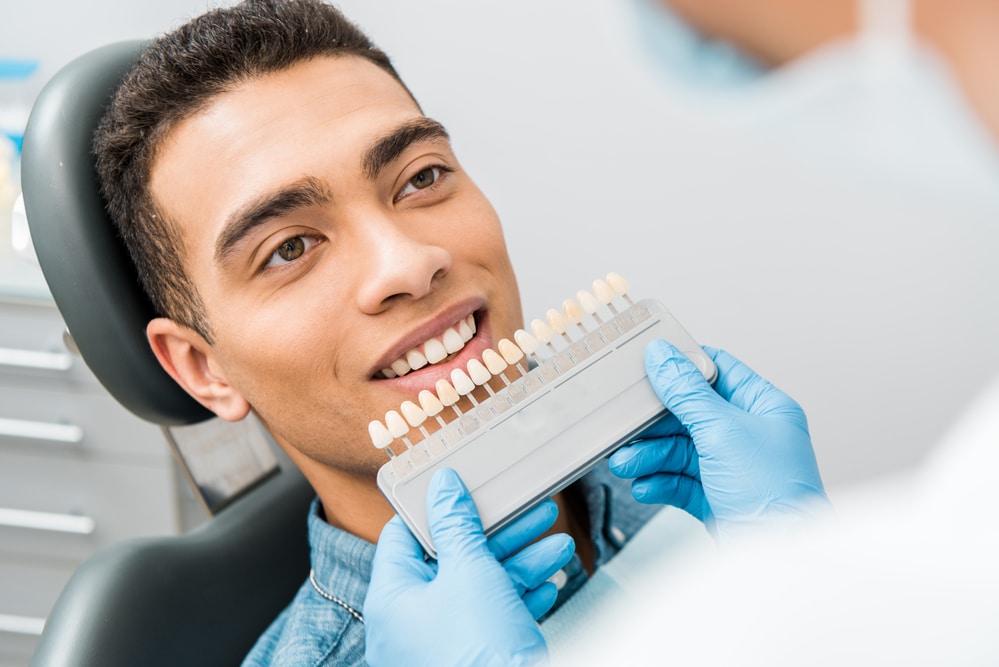
Are you self conscious about the color of your teeth? Teeth whitening can help with this. While easier on teeth with a yellow tint, if you have blue or gray teeth, this may help too. There are many different over-the-counter teeth whitening options, but the best results, go to a professional. You can choose between an in-office whitening treatment or take-home bleaching trays.

#2. Crowns

While most often used in the treatment of root canals, crowns can also restore the appearance of your teeth. Dental crowns are caps that are placed over your natural tooth, protecting and supporting it. These are often used to save a tooth that was damaged from trauma or decay, and can be a solution for cosmetic issues, such as if you have a cracked or discolored tooth.

#3. Veneers

Veneers are tooth-shaped shells that fit over your tooth in order to correct any imperfections in your smile. They can help restore worn teeth, slightly misaligned teeth, chipped teeth, closing gaps and spaces between teeth, and improving the aesthetic of your teeth. 

#4. Implants

Dentists typically do whatever possible in order to save your natural teeth. However, if you are missing teeth or if your natural teeth cannot be saved, you can get implants. Implants improve the functionality of your teeth as a whole, as well as help you get your smile back by filling in any gaps missing teeth would cause.

adult braces

#5. Orthodontics

If you have crooked teeth, braces or invisible aligners can straighten them out. Depending on the severity of your unique situation, options vary. While invisible aligners are fantastic for allowing you to straighten out your smile without needing to worry about trying to hide braces, braces may sometimes be necessary, such as if you have severely crooked teeth.

An orthodontist will need to see your teeth in order to advise you on the best orthodontic option for you.

Do You Want To Get Your Smile Back?

VIP Smiles is here to help! We offer restorative and cosmetic dentistry options, as well as orthodontics. We know how teeth issues can make you feel self-conscious and impact your confidence. We take pride in helping our patients get their smile back in the best way for their unique situation. Contact us today to learn more about our services or to schedule a consultation.

Filed Under: Blog Post

Here in the United States, white teeth signify good dental hygiene and increase the attractiveness of your smile. While it’s known that various foods and beverages can stain your teeth and that not taking care of your teeth will lead to them turning darker yellows and even browns, blue or grey teeth aren’t so common. 

As such, if you have blue or grey teeth, you may be alarmed and not know what this means. You may not know what to do, aside from go to the dentist. 

Here is what you need to know about common causes for blue or grey teeth and what your options for treatment are.

Blue Or Grey Teeth Can Be Natural

grey teeth

Dental trauma is the most common cause of a grey tooth. However, your teeth can also naturally be blue or grey. 

A healthy tooth can be anything from light yellow to light grey. It depends on the color of the dentin and the color of the enamel. Dentin is naturally yellow while enamel is slightly blue and translucent. Teeth can naturally change color as we age, due to enamel becoming thinner, showing more of the dentin’s color. 

Your teeth can also turn blue or grey. This can result from extrinsic stains or intrinsic stains, such as from disorders, medications, trauma, and more. 

Blue or grey teeth can be one singular tooth or all of them. Generally speaking, if all of your teeth are blue or grey, it’s likely that this is more of a cosmetic problem. This can result from staining, aging, or an issue during tooth development. You’ll still want to see your dentist regularly, to be sure you don’t have any underlying problems.

However, if one tooth turns blue or grey, this can be a sign of a serious dental problem. This is especially true if the color change happens fairly quickly. 

What Causes Blue Or Grey Teeth?

If your teeth haven’t always been blue or grey or one or two specific teeth rapidly changed color, you likely have a serious dental problem on your hands. This color change can result from a variety of factors.

Some of the causes of blue or grey teeth include:

grey teeth
  • Anything that cuts off blood flow to the tooth, resulting in tooth death.
  • Aging.
  • Restorations, especially metal showing through enamel or porcelain. This is more common with old restorations. They can be replaced for a more natural appearance. 
  • Tetracycline. This is an antibiotic and the most probable cause for children under 8. Blue or grey teeth can happen if the mother took it during pregnancy. If this is why your teeth are blue or grey, your teeth often bleach differently, so veneers or crowns may give better results
  • Dentinogenesis imperfecta. This is a hereditary disorder that weakens teeth.
  • Medications.

Your dentist will assess your teeth to determine the cause. They’ll do this with an examination and X-rays. They may also do a pulp test for necrosis.

About Dead Teeth

When your tooth pulp dies, the tooth can turn grey, purple, pink, dark yellow, or even black. This is because the degradation process of dead tissue can produce variety of colors. Dead teeth appear noticeably darker from their original color, so if you have one tooth that’s always been a bit darker than the others, that doesn’t necessarily mean it’s a problem.

Teeth can die from tooth trauma. They can also die from infection, like untreated cavities. A change in tooth color can be a sign that the tooth is dying. It can put other teeth at risk through bacteria spreading. 

Dead teeth are usually treated with root canals to remove dead pulp. If the tooth cannot be saved, it may be extracted.

A root canal won’t make a dead tooth white again because of the pigmented molecules in the hard tooth structure. As such, you can ask your dentist about internal tooth bleaching. They can do this immediately after your root canal treatment.

If you have substantial loss of your hard tooth structure, this can necessitate a crown. Dentists match the color of crowns to your existing teeth, so you will no longer have one that is blue or grey while the others are a natural color. 

white teeth desirable

Treatment Options For Blue Or Grey Teeth

While whitening is best for yellow teeth, whether or not it can help with blue or grey teeth depends on the shade and cause. If your tooth is blue or gray internally, external treatments won’t make a difference. If it’s external, whitening treatments can help. If whitening doesn’t work, your dentist may recommend other options, like veneers.

Do not ignore blue or grey teeth. Infections can be very dangerous, spreading not just to other teeth, but also to the bloodstream, brain, airway, and more.

If discoloration is your only symptom, it’s likely not an emergency. When coupled with swelling around tooth, pain, pus drainage, and the like, though, you want to seek treatment as soon as possible. This can indicate the infection has spread into the jawbone.

Even if your blue or grey tooth is not yet an emergency, it can turn into one. Don’t risk an emergency situation. See the dentist if you have a tooth that’s blue or grey for appropriate treatment.

Seeing your dentist regularly can help catch problems early on and reduce your risk of emergency situations. If you experience dental trauma, you can seek emergency dental care so that it’s treated as quickly as possible.

About Self-Treating Blue Or Grey Teeth

If you have blue or grey teeth, you may be tempted to use at-home whitening treatments. While some of these can help, you want to be careful with OTC whitening treatments. They could end up damaging your teeth due to overuse, improper use, or the ingredients in the treatment.

It’s best to get professional teeth whitening, for both safer and better results.

VIP Smiles provides professional teeth whitening services, in addition to other dental services. If you have blue or grey teeth, see us as soon as possible for treatment. We will be able to tell you whether it’s simply part of aging and provide you with whitening or whether it’s a serious problem that needs treatment as soon as possible.

Filed Under: Dentist Syracuse Utah, Blog Post

  • « Previous Page
  • 1
  • 2
  • 3
  • 4
  • 5
  • …
  • 43
  • Next Page »

Hours

Monday 8AM–5PM
Tuesday 7AM–4PM
Wednesday 8AM–5PM
Thursday 7AM–4PM
Friday 7AM–3PM
Saturday Closed
Sunday Closed

Services

Cosmetic Dentistry Restorative Dentistry Family Dentistry Orthodontics Emergency Dentistry Dental Technology

Quicklinks

Directions Appointments Contact Blog About

Address

780 S 2000 W Suite F-1,
Syracuse, UT 84075

Follow Us

Facebook - VIP Smiles YouTube - VIP Smiles Yelp - VIP Smiles

Directions

Call Us

(385) 316-6386

Contact Us

"*" indicates required fields

This field is for validation purposes and should be left unchanged.
Consent*
By checking this box, I consent to receive transactional messages related to my account, orders, or services I have requested. These messages may include appointment reminders, order confirmations, and account notifications among others. Message frequency may vary. Message & Data rates may apply. Reply HELP for help or STOP to opt-out.
Consent*
By checking this box, I consent to receive marketing and promotional messages, including special offers, discounts, new product updates among others. Message frequency may vary. Message & Data rates may apply. Reply HELP for help or STOP to opt-out.

2026VIP Smiles Dental | All Rights Reserved | Privacy Policy | Accessibility Statement | Anti-Discrimination | HIPAA Privacy Policy | Healthcare Disclaimer | Terms | XML Sitemap | Sitemap | Site by PDM